
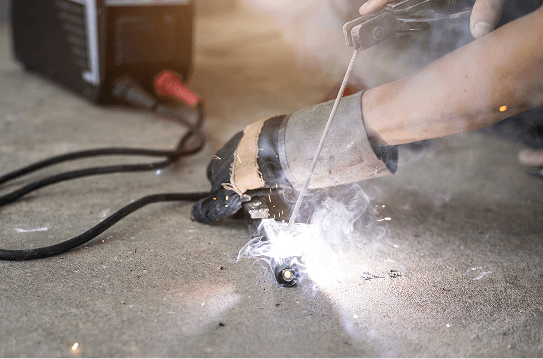
Selecting the right welding electrode is one of the most important decisions you’ll make before striking an arc. The right electrode not only affects the strength and quality of your weld but also determines how efficiently you can work.
At Airgas Malaysia, we help welders and fabricators find the perfect match for every application. Whether you’re welding mild steel, stainless steel, or cast iron, here’s a simple guide to help you choose the right electrode for the job.
1. Understand Your Base Metal
The first step in choosing an electrode is knowing what material you’re welding.
- For mild steel, general-purpose electrodes like E6013 or E6011 are ideal.
- For stainless steel, go with E308L or E309L electrodes.
- For cast iron, use nickel-based electrodes such as ENiFe-CI or ENi-CI.
Always match the electrode composition to the base metal for proper fusion and strength.
2. Consider the Welding Position
Different electrodes are designed for different welding positions — flat, vertical, horizontal, or overhead.
- E6013: Best for all positions with a smooth finish.
- E7018: Excellent for structural work and out-of-position welding due to its strong, low-hydrogen formula.
- E6010: Great for deep penetration in vertical and overhead positions.
Check the fourth digit in the electrode classification (e.g., “E6013”) — it tells you what positions the rod can be used in.
3. Match the Electrode to the Welding Current
Some electrodes are designed for AC, others for DC, and some for both. Using the wrong current type can cause poor arc stability or excessive spatter.
For example:
- E6011 – Works with AC and DC, perfect for portable or fieldwork.
- E7018 – Prefers DC positive (DCEP) for smoother, stronger welds.
Always refer to the manufacturer’s specifications for the best current settings.
4. Think About the Application and Strength Requirements
If you’re welding thin sheet metal, you’ll need a mild, easy-start electrode like E6013.
For heavy-duty structures, E7018 is preferred for its high tensile strength (up to 70,000 psi) and low hydrogen content, which prevents cracking.
Each project has different mechanical requirements — so choose based on the strength, ductility, and finish your weld needs.
5. Store and Handle Electrodes Properly
Even the best electrode won’t perform well if it’s exposed to moisture or contaminants.
Store low-hydrogen electrodes like E7018 in a dry oven at around 120–150°C to prevent moisture absorption, which can lead to hydrogen cracking.
Final Thoughts
Choosing the right electrode means balancing metal type, position, current, and application. The right combination ensures strong, clean, and efficient welds — saving you time, material, and rework.
At Airgas Malaysia, we stock a wide range of welding electrodes and consumables from trusted brands to suit every process and requirement. Our experts are always ready to help you find the perfect electrode for your next project.
📞 Contact Airgas today or visit our nearest branch to learn more about our full line of welding products and solutions.

Hi, this is a comment.
To get started with moderating, editing, and deleting comments, please visit the Comments screen in the dashboard.
Commenter avatars come from Gravatar.